When every team has a plan, but no one shares the same direction
Sit in almost any leadership meeting and you'll hear the list. Finance wants to reduce costs. IT wants to replace the 15-year-old ERP. Marketing wants a new targeted campaign. Operations want to trial a new delivery partner. E-commerce wants to launch a marketplace. Each initiative may make sense on its own. But who's making sure they add up to something bigger? Together, they're five arrows pointing in five different directions.
Now take a family booking next summer's holiday. They start dreaming in January, shortlist in February, book in March and fly in July. They never meet your finance, IT or marketing teams. They meet one company, and they notice when the pieces don't fit.
They're not alone. In IMRG and Columbus's Connected Consumer research, nine out of ten UK shoppers said it matters that a retailer's channels feel connected. Their biggest frustrations were having to repeat information (44.9%) and getting conflicting answers depending on where they looked (36.8%). That's what five arrows feel like from the outside. For customers, internal silos aren't an organisational problem. They're a poor experience.
For leadership, the question is whether the business is investing in a collection of initiatives or working towards a shared outcome.
Why the ‘What list’ stalls
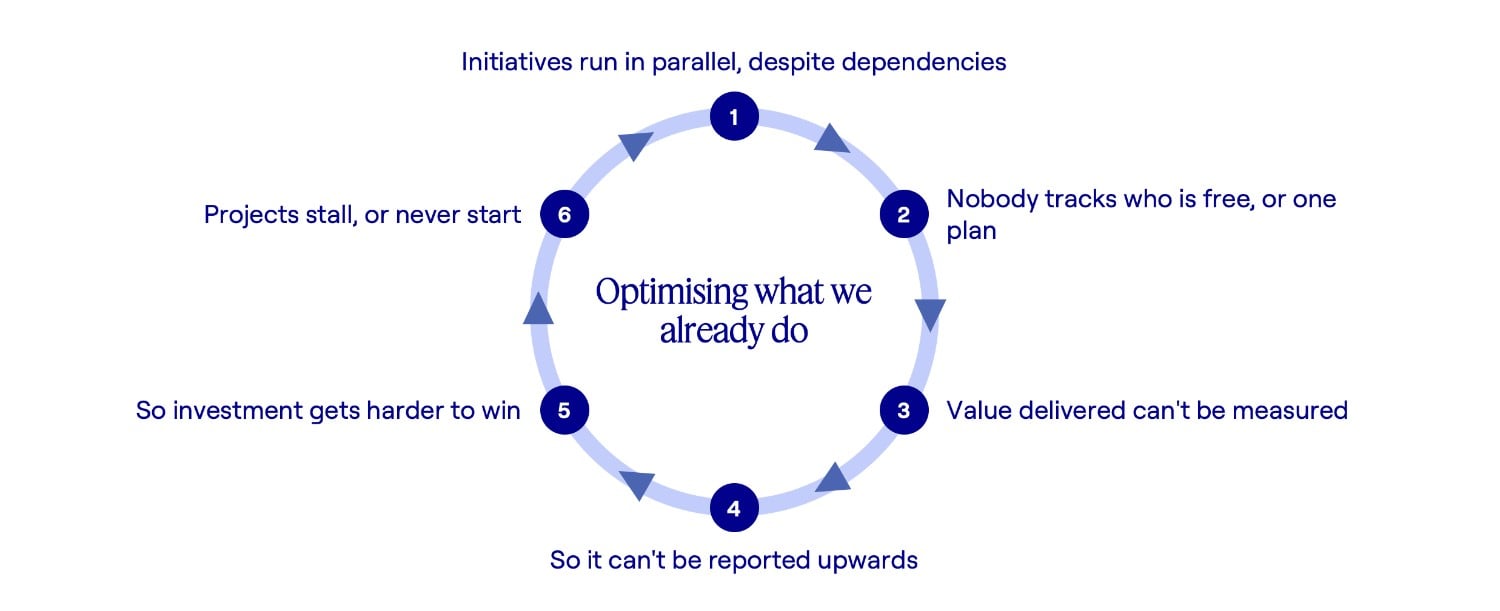
A list of initiatives looks like a strategy. It rarely behaves like one. The projects run in parallel, even when they depend on each other. Nobody tracks who is free, and nobody holds one plan. So, the value can't be measured. If it can't be measured, it can't be reported upwards. And if it can't be reported, the next round of investment gets harder to win.
Around it goes. The PMO ends up policing the queue. Good ideas sit on the list for years, not because they lack value, but because nobody else in the business sees why they matter. The business gets better at what it already does. Nothing really moves.
 Start with why, not what
Every board already agrees on the higher why: grow revenue, grow EBITDA. The trouble is that it's too high to steer by. Nobody in operations knows what to do differently on Monday because of an EBITDA target. The useful why’s sit one level down. Customer acquisition. Retention. Revenue per customer. Cross-sell. Average order value. Lifetime value. Cost to serve. These are the levers, and everyone can see which ones their work moves.
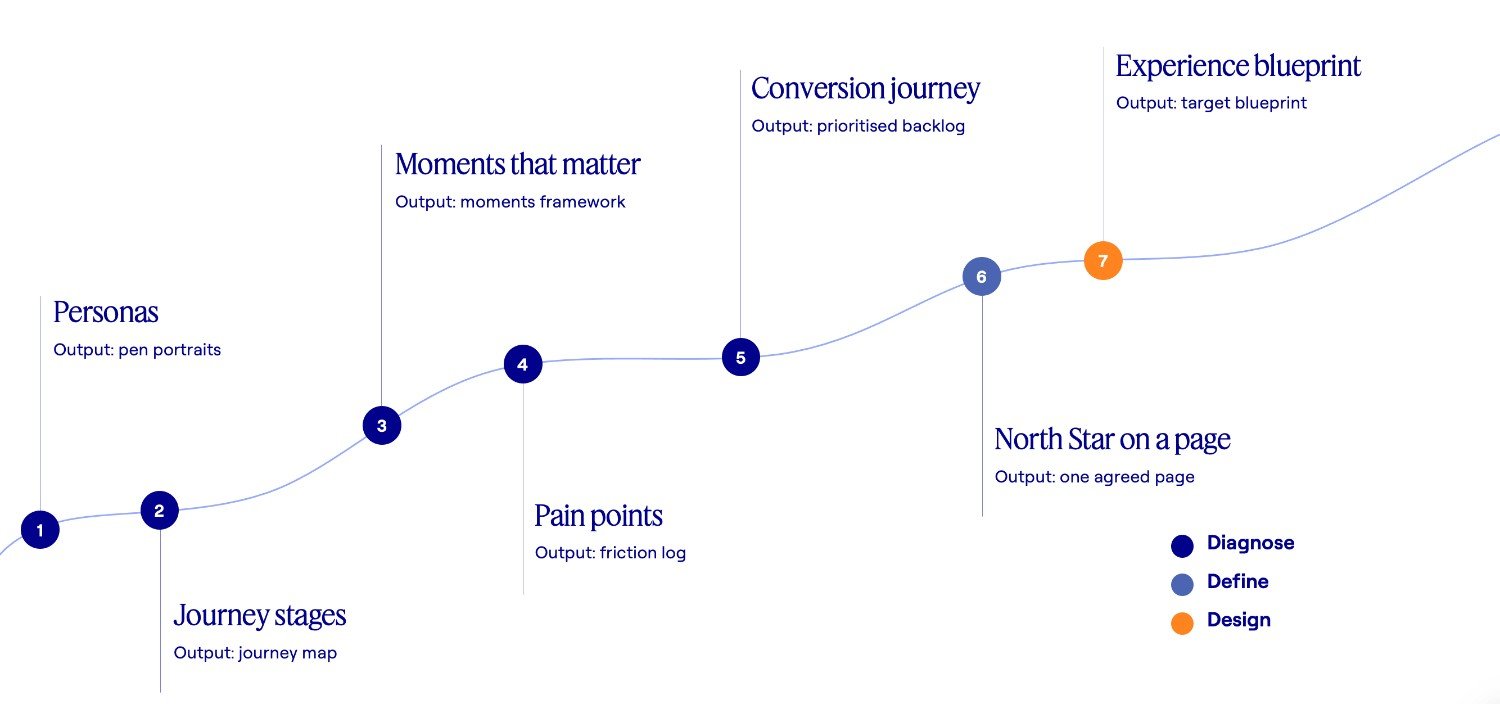
Put every initiative under the driver it moves, and something changes. The ERP replacement and the marketing campaign can finally be compared, because they're measured in the same currency. The arguments don't stop. But now they're about evidence rather than volume.
One ‘North Star’, five functions
A ‘North Star’ is the customer outcome the whole business is trying to create. Brand, commerce, marketing, operations and technology keep their own jobs. What changes is the basis on which they decide, and where the money goes.
For our holiday family, it might look like this:
- Brand makes its promise something the whole business designs to and carries it into every channel.
- Commerce plans the trading calendar around the family's moments, not the company's.
- Marketing moves spend towards the moments that bring them back next year.
- Operations set service levels by the promise. If it says, "we're with you", someone answers when the flight is cancelled.
- Technology sequences its roadmap by customer outcome, not by which system is oldest.
Same business, same people. One direction.
One direction doesn't mean one identical experience. In the same research, only 31.9% wanted every channel to be the same. Many valued app-only offers or different ways to get support. What shoppers don't forgive are the joins: starting a process again (38.6%) or losing progress between channels (35.2%).
 Diagnose before you design
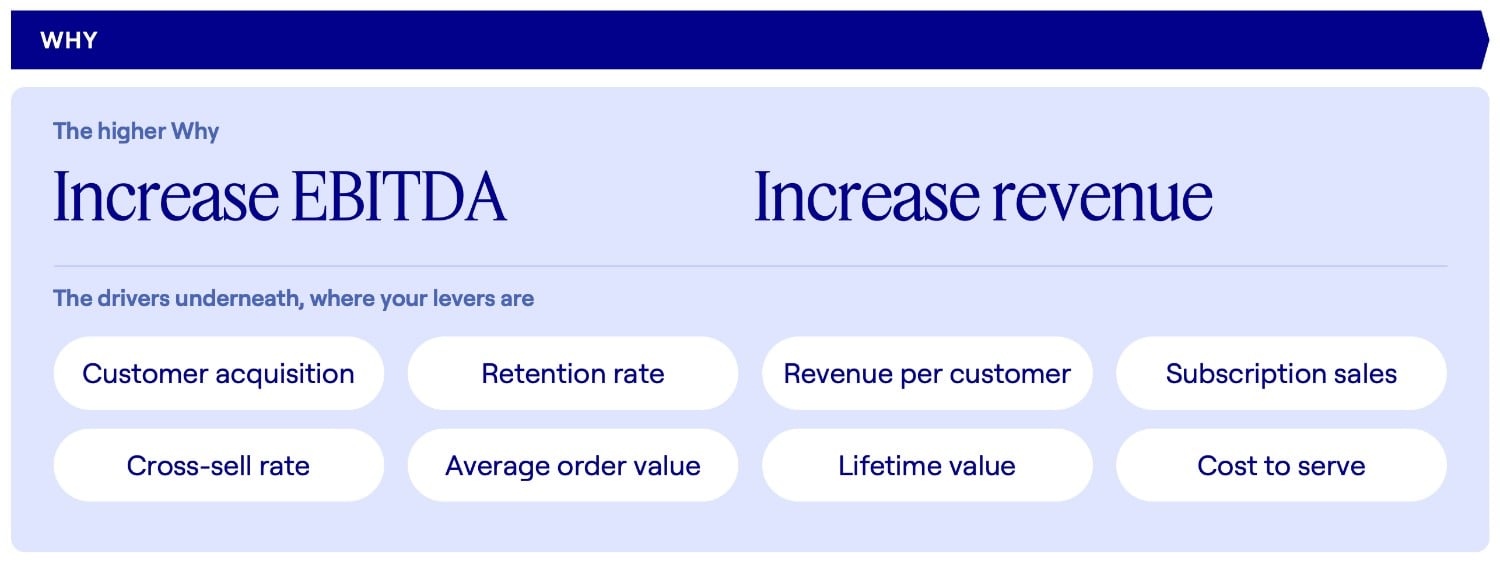
The temptation is to write the vision first. Resist it. You can't point a business at a customer you haven't understood.
Start with who your customers really are. Hint: they're not you. Then map how they move from the first daydream to booking the next trip. Find the moments that matter to them, not just to you.
Our holiday family has around six of those moments, and only one is the booking itself. Coming home full of stories. The holiday blues back at work. The January evening spent planning the year. Packing the bags. Those are the moments that decide whether they book with you or with someone else.
Then find where the experience breaks. Effort where there should be none. Needs nobody met. Places where intent quietly leaks away. Two channels telling them different things.
It's rarely where the business expects. 39.9% of shoppers say finding the right product takes the most effort, and 36.6% say comparing options. Only 6.3% pick checkout. The friction sits in the decision, not the transaction.
Only then does it get commercial. Every friction point goes into a backlog against the stage where it happens. Each one gets a hypothesis before anyone builds anything: if we change this, that number moves. Now the backlog gets argued about with evidence.
A vision you can't swap
A ‘North Star’ vision must pass five tests. It paints a picture of the future. You'll know when you've arrived. It has a date, or at least a horizon. It's specific to you. And it helps you decide, which usually means it tells you what to stop doing.
The test most visions fail is the swap test. Could a competitor take yours and use it unchanged? If so, write it again.
Here's an illustrative one that passes: to become the travel company people plan their year around, with holidays so personal they feel chosen for you, from the first daydream to the last story told at home. No rival could lift that without changing what they do.
Put it on one page, with the outcomes it drives, what's holding you back and how you'll measure progress. Then get the leadership team to sign it. A good vision earns its keep by settling arguments that would otherwise run for months. Which journey do we rebuild first? Which customer data has to be single? What do we personalise, and for whom?
Pick a pathway you can afford
A ‘North Star’ doesn't have to be reached in one leap. There's more than one road.
Good: foundation first. Stabilise, fix the core and deliver the conversion wins. Customers feel less change early on, but value arrives quickly.
Better: balanced transformation. Scale personalisation and automation. It pays from the second quarter but needs data and content capability early.
Best: lead the market. End-to-end experience leadership. The biggest prize, the biggest investment and the longest payback.
Whichever you choose release value in increments. Every small what becomes a piece of the why. And because the departments already agree on where they're going, the how gets much easier.
Five questions for Monday morning
- Find the why. Can each of your top five initiatives name the growth driver it moves? If not, why is it on the list?
- Check the direction. Would finance, IT and marketing describe your customer outcome in the same words?
- Meet the customer. When did your leadership team last hear a real customer describe where the experience breaks?
- Try the swap test. Could a competitor use your vision unchanged?
- Release value early. What will a customer notice within the first year?
Next summer, our holiday family won't know which department fixed what. They'll just notice that everything fitted together. That's what one ‘North Star’ feels like from the outside.
Make the initiatives add up
A business doesn't need fewer ideas. It needs a clearer way to decide which ideas deserve attention, investment and commitment. For digital commerce leaders, that means looking beyond individual platforms and projects to the relationship between customer needs, commercial goals, operational capabilities and technology.
Want to continue the conversation? Explore why e-commerce strategy is the foundation of digital commerce success and how Columbus helps leadership teams align customer needs, business priorities and technology investments.
